
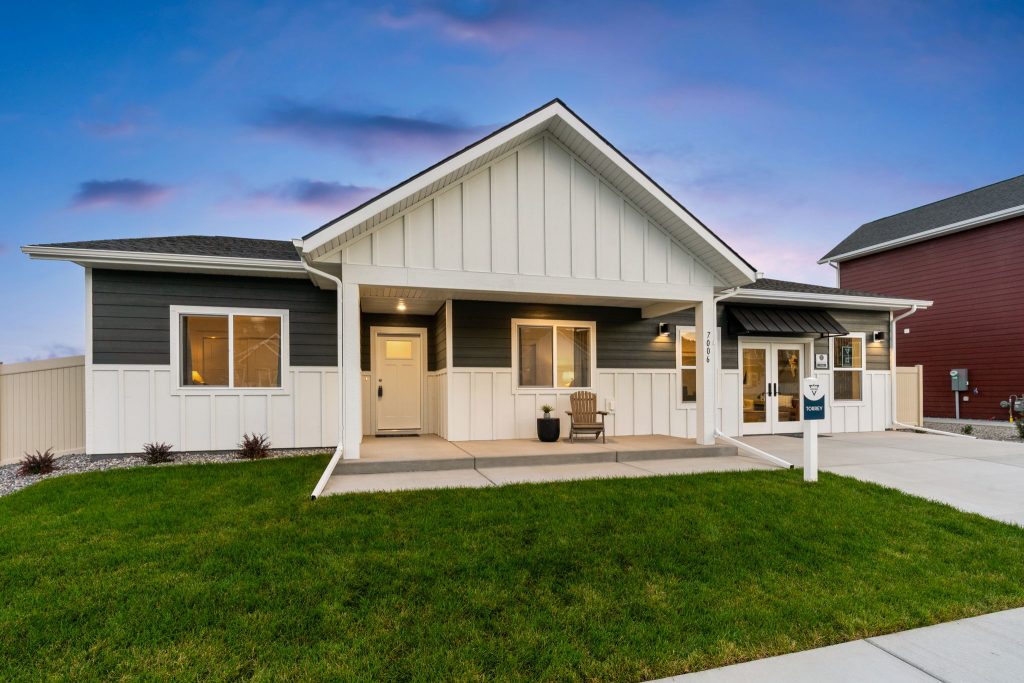
Deciding to buy your first home is a significant milestone. It’s an exciting thought, but it’s also natural to wonder if you are truly prepared for such a big step. The answer lies in a careful look at your finances, lifestyle, and future goals.
Here’s your guide to breaking down the signs you’re ready to buy your first home. Use it to help you decide if now is the right time to begin the search for your first home.
Your Financial Foundation is Solid
Before you start looking at properties, it’s crucial to have your financial house in order. Lenders will examine your finances in detail, and you should be just as diligent.
You Have a Stable Income
Lenders look for predictability. A consistent employment history, typically in the same job or field for the last two years, shows that you have a reliable income to cover your mortgage payments. This stability gives them confidence in you as a borrower.
You Have an Emergency Fund
Homeownership comes with unexpected expenses, from a furnace that fails in the middle of winter to an appliance that suddenly breaks down. An emergency fund is your financial safety net for these moments.
- The Goal: Save three to six months of essential living expenses.
- The Purpose: This money should be separate from your down payment savings and is there to cover you in case of a job loss or a major, unforeseen repair.
You Understand Your Buying Power
Your income and current debt level are key factors in determining how much home you can comfortably afford. Lenders use a metric called the debt-to-income (DTI) ratio to measure this.
The 28/36 Rule
This guideline helps ensure you don’t stretch your budget too thin. It’s broken into two parts:
- The 28% Rule (Housing): Your total monthly housing payment—which includes principal, interest, taxes, and insurance (PITI)—should be no more than 28% of your gross (pre-tax) monthly income.
- Example: If your gross monthly income is $9,000, your target housing payment should be under $2,520 ($9,000 x 0.28).
- The 36% Rule (Total Debt): Your housing payment plus all your other monthly debts (like car payments, student loans, and credit card minimums) should not exceed 36% of your gross monthly income.
- Example: On that same $9,000 income, your total monthly debt payments, including the mortgage, should be less than $3,240 ($9,000 x 0.36).
Following this rule helps you avoid becoming “house poor,” a situation where your home costs consume too much of your income.
Your Credit Score is in Good Shape
Your credit score is a number that signals your reliability as a borrower. A higher score often unlocks a lower interest rate, which can save you tens of thousands of dollars over the life of your loan.
- 620+: This is often the minimum score needed to qualify for a conventional loan.
- 740+: A score in this range will generally qualify you for the most competitive interest rates.
You can boost your score by paying every bill on time, paying down high-balance credit cards to lower your credit utilization, and checking your credit reports for any errors to dispute.
You’ve Saved for the Upfront Costs
Buying a home requires a significant amount of cash at closing. This money is used for your down payment and various closing costs.
Down Payment Paths
Many first-time buyers get started with less than the traditional 20% down payment.
- 3% Down: Some conventional loan programs are designed for first-time buyers with as little as 3% down.
- 3.5% Down: FHA loans, which are insured by the government, allow for down payments as low as 3.5%.
- 20% Down: Paying 20% or more upfront allows you to avoid Private Mortgage Insurance (PMI), an extra monthly fee that protects the lender.
Closing Costs
These are the fees you pay to finalize the loan and cover services like the appraisal, title search, and loan origination.
- Budget: Plan for these to be between 2% and 5% of the home’s purchase price.
Savings Example for a $850,000 Home:
- 5% Down Payment: $42,500
- Estimated 3% Closing Costs: $25,500
- Total Cash Needed at Closing: $68,000 (plus your separate emergency fund)
You’ve Budgeted for the Full Cost of Owning
Your monthly housing payment is more than just the loan itself. The complete monthly expense includes several components.
- PITI: Principal, Interest, Taxes, and Insurance.
- PMI: An extra fee if you put down less than 20%.
- HOA Dues: Required if you live in a community with a homeowners association.
- Utilities: These are often higher in a house than in an apartment.
- Maintenance & Repairs: A good rule of thumb is to budget 1% of the home’s value each year for upkeep. For a $850,000 home, that’s $8,500 per year, or about $708 per month.
Your Lifestyle is Ready for the Change
The financial component is critical, but homeownership is also a significant lifestyle adjustment.
You Plan to Stay Put
Buying and selling a home involves substantial costs. To build equity and make the transaction financially worthwhile, it’s wise to plan on living in the home for at least five years. If a job change or move is likely in your near future, renting may still be the better financial choice.
You Are Prepared for Maintenance
When you own a home, you become your own landlord. You are responsible for all maintenance and repairs, from mowing the lawn to fixing a leaky faucet. You must be prepared to either invest your personal time in these tasks or have the budget to hire professionals.
Your Next Steps
If these signs you’re ready to buy your first home sound like you, it may be time to start your homeownership journey with Williams Homes. The next logical step is to get pre-approved for a mortgage. A pre-approval from a lender will provide you with a firm budget and demonstrate to sellers that you are a serious, qualified buyer. Be sure to shop around and compare rates from at least three different lenders to find the best deal for your situation.
With careful planning and preparation, you can turn your dream of homeownership into a reality.
Are you ready to take the exciting first step on your homeownership journey? Visit WilliamsHomes.com to discover our beautiful new home communities located in California, Idaho, Montana, and Texas. You can also explore our selection of available and quick-move homes, designed for those who are eager to settle in sooner. Our experienced and dedicated team is ready to guide you through the process and help you find the home that is absolutely perfect for you and your family.